
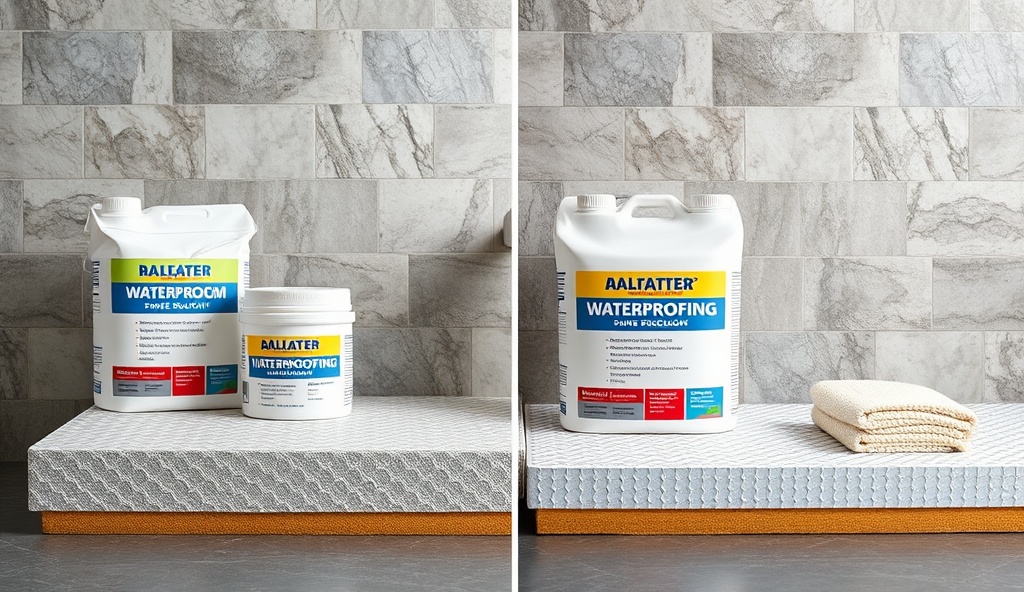
The Critical Importance of Shower Waterproofing
Waterproofing is the foundation of every durable bathroom. Yet many renovations cut corners on waterproofing to save money—a decision that leads to costly failures within years. Understanding waterproofing systems and the difference between professional-grade options is essential before choosing a contractor.
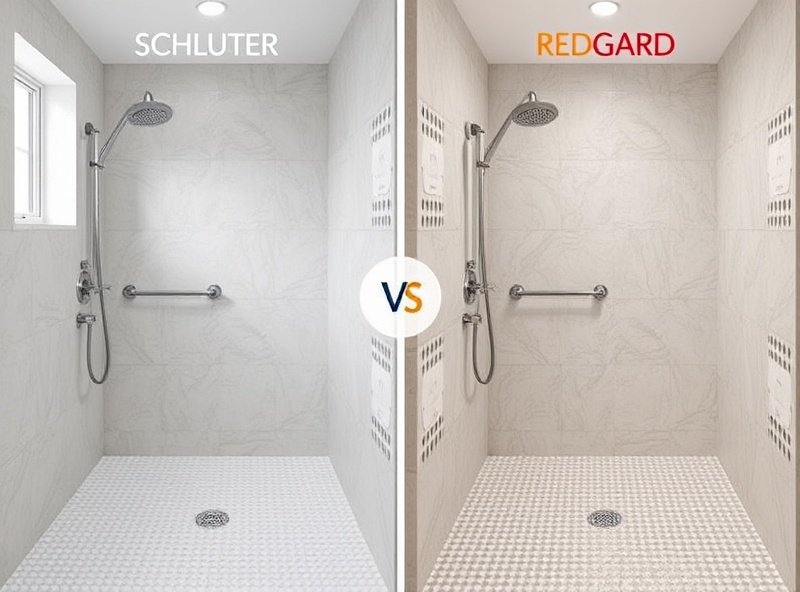
This article explains the two most common bathroom waterproofing approaches: Schluter-SYSTEMS and RedGard. Understanding the differences helps you make informed decisions about your bathroom renovation.
RedGard: Liquid Membrane Waterproofing
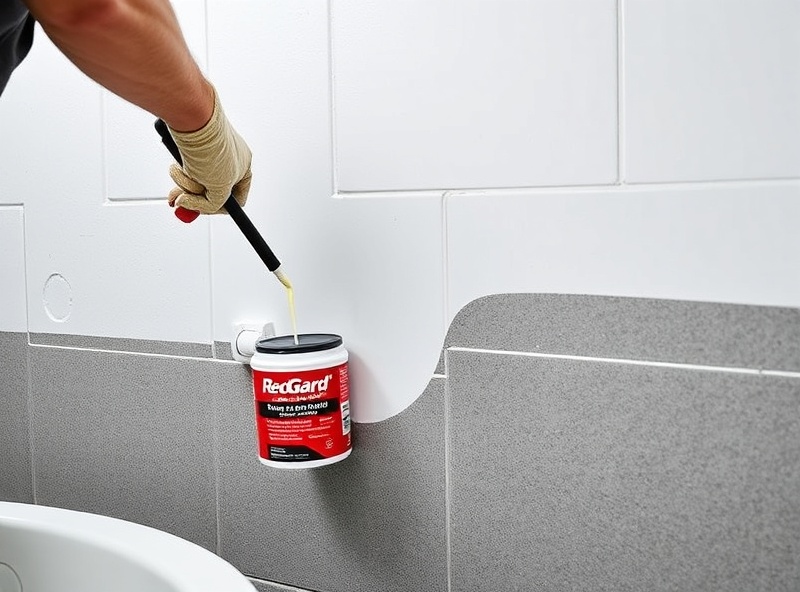
RedGard is a liquid waterproofing membrane applied directly to drywall or cement board before tile installation. It’s been the industry standard for decades and offers several advantages.
How RedGard Works
RedGard is a polyurethane-based liquid that’s applied with a paint roller or sprayer. The liquid creates a continuous waterproof barrier across the substrate, sealing seams and surface imperfections. Water can’t penetrate—it stays on the surface and drains to the shower pan.
RedGard Advantages
- Cost-effective: Lower material costs than Schluter systems
- Flexible application: Works with various substrates (drywall, cement board)
- Proven track record: Decades of use in bathrooms
- Seam sealing: Liquid naturally fills seams and imperfections
- DIY-friendly: Some homeowners apply RedGard themselves (though professional application is better)
RedGard Limitations
- Application-dependent: Quality depends heavily on proper application—incomplete coverage causes failures
- No integrated drainage: Relies on shower pan slope for water management
- Substrate dependency: Drywall underneath can still absorb moisture from behind
- Sealing requirement: Grout must be sealed separately
- Repair difficulty: Patches don’t always bond perfectly to existing membrane
Schluter-SYSTEMS: Integrated Waterproofing System
Schluter-SYSTEMS is a comprehensive approach combining waterproofing membrane, edge profiles, drainage, and integration with tile installation. It’s the gold standard in professional construction.
How Schluter-SYSTEMS Works
Schluter prevents water from ever reaching the substrate. The system includes:
- Waterproofing membrane: Applied to substrate, but water can’t penetrate
- Edge profiles: Schluter profiles integrated with tile, preventing water from traveling behind edges
- Drainage layer: Built-in drainage system directs water toward drain
- Integrated system: All components work together as designed
Schluter-SYSTEMS Advantages
- Comprehensive protection: Multi-layer approach prevents water infiltration at every point
- Professional standard: Used by professional tile contractors and in high-end applications
- Integrated edge protection: Profiles prevent water from traveling behind tile edges
- Drainage management: Built-in drainage layer actively directs water toward drain
- Durability: Systems proven to last 20+ years with proper installation
- Warranty support: Manufacturer backing with proper installation
- Industry confidence: Recommended by tile associations and professional standards
Schluter-SYSTEMS Limitations
- Higher material cost: More expensive than RedGard
- Professional installation required: Not a DIY system—requires trained installer
- Specific installation sequence: Must follow precise protocols
- Aesthetic considerations: Visible profiles require design integration
Direct Comparison: When to Use Each System
| Factor | RedGard | Schluter |
|---|---|---|
| Cost | Lower material cost | Higher material cost |
| Durability | Good if properly applied | Excellent, proven 20+ years |
| Application Dependency | High—quality depends on installer | Medium—professional application standardized |
| Drainage Integration | Relies on pan slope | Built-in drainage layer |
| Edge Protection | Limited | Integrated in profiles |
| Professional Standard | Acceptable | Gold standard |
| Warranty | Limited | Full warranty with professional installation |
| Long-term Reliability | Variable by installer | Consistent, proven |
ARRO’s Approach: Schluter for Professional Results
ARRO uses Schluter-SYSTEMS on all professional bathroom renovations for several reasons:
- Proven durability: We’ve seen Schluter systems last 20+ years without failure
- Professional standard: Schluter is what professional tile contractors use
- Integrated protection: The system prevents water problems at every point
- Manufacturer support: Schluter backs products with comprehensive warranties
- Client confidence: Clients understand they’re getting professional-grade waterproofing
We’ve observed RedGard failures over time, particularly when applied by less experienced installers. Water infiltration, mold growth, and structural damage follow. These failures are expensive to remediate.
The Real Cost of Waterproofing Failures
Choosing budget waterproofing to save $1,000-$2,000 on a $40,000 bathroom remodel leads to:
- Structural damage: Water destroys subflooring, framing, and sheathing ($10,000-$30,000+)
- Mold remediation: Professional mold removal and remediation ($5,000-$15,000+)
- Health concerns: Mold creates respiratory and health issues
- Property value: Mold and water damage impact home value and resale
- Complete re-renovation: Bathroom must be gutted and rebuilt ($30,000+)
A failure that could have been prevented for $2,000 in upgraded waterproofing costs $30,000-$60,000 to remediate.
What Professional Waterproofing Includes
Beyond choosing Schluter or RedGard, professional waterproofing includes:
- Proper substrate prep: Clean, level, structurally sound substrate
- Adequate cement board: Using proper cement board in wet areas (not drywall)
- Correct slope: Shower floor sloped ¼ inch per foot toward drain
- Proper ventilation: Exhaust fan sized and installed correctly
- Grout sealing: Grout sealed after installation
- Ongoing maintenance: Homeowner awareness of ventilation and maintenance
Frequently Asked Questions About Waterproofing Systems
Is Schluter really worth the extra cost vs. RedGard?
Yes. RedGard costs less upfront ($1,000-$2,000 savings) but Schluter’s integrated system prevents expensive failures. Schluter’s edge protection, built-in drainage, and comprehensive design are worth the investment. A waterproofing failure costs $30,000-$60,000 to remediate—far exceeding the initial difference. Professional contractors use Schluter for good reason.
Can RedGard work if properly applied by a skilled installer?
RedGard can work when properly applied by experienced installers, but relies heavily on application quality. Even small voids or incomplete coverage create failure points. Schluter’s system is more forgiving because multiple layers protect against single-point failures. Quality matters most with liquid membranes, which varies by installer experience and attention to detail.
Do I really need the edge profiles that come with Schluter?
Yes. Schluter profiles prevent water from traveling behind tile edges—a common failure point. Without integrated edge protection, water wicks behind tile edges, bypassing the membrane below. This is why tile associations recommend integrated edge systems. It’s a critical difference that justifies Schluter’s cost.
How long does Schluter waterproofing last?
Schluter systems properly installed last 20-30+ years. The manufacturer warranties the product for 20 years with professional installation. Many bathrooms with Schluter remain dry and damage-free 20+ years later. RedGard can last similarly if well-applied, but has more variable long-term performance.
Can I apply Schluter myself to save money?
No. Schluter requires professional installation following precise protocols. Improper installation voids warranty and creates failure risk. The system’s value comes from coordinated installation where all components work together. DIY application defeats the purpose and creates liability. Budget contractors to install Schluter correctly.
What happens if waterproofing fails—is it covered by warranty?
Schluter warranties professional installation. RedGard’s warranty is more limited. Either way, warranty requires proper installation by licensed contractor. Homeowner negligence (like no exhaust fan) isn’t covered. Professional workmanship warranties cover defects, not owner misuse. Always get warranty details in writing before construction starts.
Does the shower pan drain need sloped waterproofing with Schluter?
Yes, proper slope is still required with any system (¼ inch per foot toward drain). Waterproofing doesn’t replace proper slope—it’s the second layer of protection. Slope directs water to the drain; waterproofing prevents water from passing through if slope fails or water temporarily pools. Both are essential.
Should I require Schluter even if contractor recommends RedGard?
If cost isn’t a constraint, yes. Schluter provides superior protection and peace of mind. If budget is tight, ensure contractor uses high-quality RedGard with experienced application. Either way, confirm proper substrate, ventilation, and maintenance. Don’t skip waterproofing system quality—it’s the foundation of bathroom durability.
Questions to Ask Your Contractor
Before hiring a contractor for bathroom renovation:
- Which waterproofing system do you use? Professional contractors use Schluter or equivalent premium systems
- Why do you recommend this system? Understanding the reasoning matters
- What’s your warranty on waterproofing? Professional contractors warranty workmanship
- Can you provide references of similar projects? Previous clients confirm reliability
- What substrate preparation is included? Quality substrate is foundational
Conclusion: Professional Waterproofing Pays Off
Waterproofing is not where to cut corners. The difference between budget and professional-grade systems is relatively small ($1,000-$3,000) compared to the cost of failure ($30,000+).
ARRO recommends Schluter-SYSTEMS for professional, durable bathroom waterproofing. The integrated approach, proven durability, and manufacturer support provide peace of mind that your bathroom will last decades without water damage.
If you’re planning a bathroom renovation, discuss waterproofing approaches during your consultation. A contractor who cuts corners on waterproofing is cutting corners on the foundation of your bathroom’s durability.